About
ITPartner is a private concept studio built on a family company (since 2018). Concepts are born and brought to life here — from digital projects and brands to music and games.
Founded
Successful projects
On the internet since
How this studio works
ITPartner is not a classic agency. It is a small team’s concept studio. We see concepts everywhere and in any niche — from brands and objects to store formats, spaces, businesses, digital products, music and games. The niche does not matter — everything is interesting.
Always the whole, never a detail
We never invent just a name or just a look. A concept is born whole: the product, its character, image and meaning, its mission — together with the brand and the message.
Assembled from the seen
The new is born by combining: everything we have seen, heard and tried folds into a new image. Observation → association → a new configuration.
From idea to business — with our own hands
A concept does not stay a picture and does not stop at an MVP. We build, test, launch and take it to revenue ourselves — and keep developing the best as working business projects.
“We do not consider the existing configuration final.”
This applies to products, markets and the studio itself.
To show that a small studio with modern tools can create whole products — from idea to profit. Our own projects come first; and if our way of assembling concepts fits your business, you can commission joint work or ask about existing developments for cooperation.
That is why our own projects, a music label, a game studio and services live side by side on this site. They are not different businesses — it is one studio with many outputs.
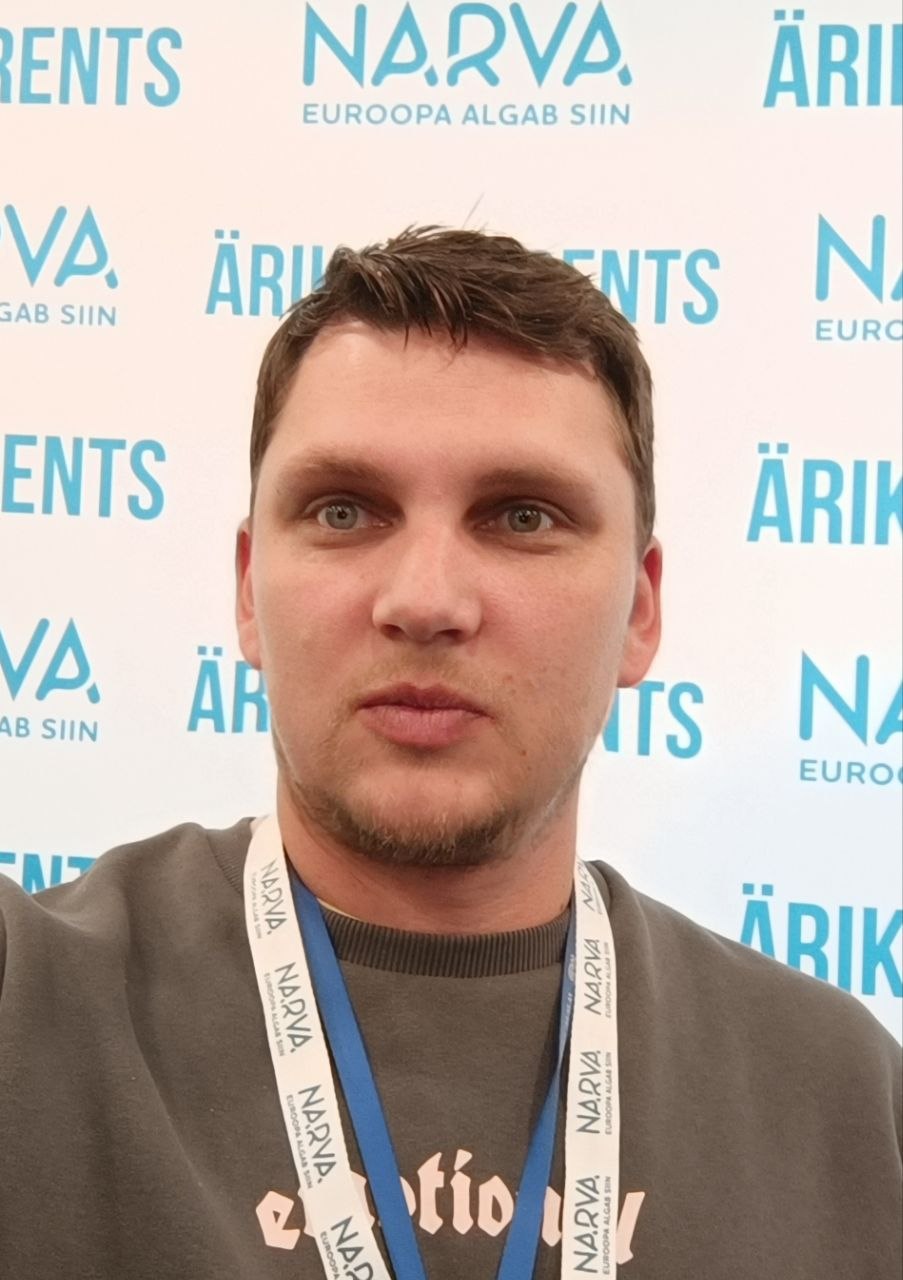
Konstantin — I create ideas and turn them into real projects
I constantly invent concepts for things, products, services and businesses that could exist in the real world.
No single industry holds me. Today it may be a web service or SaaS, tomorrow a game, a music project, a clothing brand, a physical product, an online store or a concept for a space.
What interests me is inventing something new, testing it in reality, and finding a way to turn the idea into a working project or a source of income.
How I think
I look at the world as a set of existing solutions, ideas and opportunities. I notice an interesting product, business, problem, visual, technology or way of interacting — and start thinking about what else could be assembled from it.
My ideas rarely appear out of nothing. I draw on everything I have seen and experienced, connect familiar elements and create new combinations.
So the question is never just “how to make another product”, but what concept can be built around an idea so that it has its own character, meaning, audience and way of earning.
From idea to reality
I do not treat ideas as a list of mandatory tasks. Over the years I have built a large archive of concepts: some I build myself, some I postpone, some remain creative experiments, and some wait for funding or the right partner.
To me this is the normal life cycle of an idea: idea → concept → prototype → test → realisation or archive.
If a project can be done independently and lives in the digital world — I usually build it myself. If it needs manufacturing, large capital, physical infrastructure or a team — I look for a partnership.
The archive is not a list of unfinished business. It is a set of potential projects to return to when the right resource, technology, market or partner appears.
I build, not only invent
Technology, and AI in particular, now dramatically shortens the distance between an idea and a prototype. I create:
- ✦ web services and SaaS
- ✦ websites and platforms
- ✦ affiliate projects
- ✦ online stores
- ✦ game prototypes
- ✦ music and music projects
- ✦ educational products
- ✦ digital tools
- ✦ concepts for physical products and brands
Solopreneurship
Solopreneurship is not just a work format for me — it is part of my philosophy. I love that one person can walk most of the road: invent → research → build → launch → grow an audience → monetise → automate.
Today a single person can create what used to require a small team: develop a service, launch a site, build a product, test a business model, set up marketing and earn the first money.
I am not interested in a business that simply creates another job for me. I am interested in systems that, once launched, work on their own, generate income and scale without a proportional increase in my personal working hours.
Independence does not mean refusing partnership. When a project outgrows what one person can reasonably do — manufacturing, infrastructure, large capital, logistics — I prefer to find a partner. Solo — while it is effective. Partnership — when it lets the idea become bigger.
Not an entrepreneur in the classical sense
I like entrepreneurship, but the role of someone running a large company day to day does not attract me much. I prefer the beginning of the road: see an opportunity → invent a concept → assemble a model → build a prototype → launch → find an economy that works.
In capital-intensive projects I am closer to the role of a conceptual or creative partner — helping create the product, brand, design and direction while keeping a share, with a partner running operations.
Money is part of the idea
Since childhood I have loved inventing ways to earn, so the commercial side is almost always present in my thinking. Not only “can this be made?”, but: who needs it? why will they pay? how to sell it? can it be automated? can it scale?
Affiliate marketing, advertising, e-commerce, SaaS and other monetisation models are, above all, tools. I use them to turn ideas into independent sources of income.
I see systems, not only products
I can look at a business and think not just “interesting business”, but “can this system be repeated in another niche?”. Or see a problem and immediately ask whether its solution can become a repeatable model.
An idea can start from anything: a problem, an inefficiency, an existing business model, an open niche, a technology, a product, people’s behaviour, an aesthetic idea. Around it then grows: product → brand → philosophy → mission → business model.
Everything I have seen is my source
I do not create ideas in a vacuum. I constantly watch the world: brands, products, businesses, advertising, music, games, architecture, urban space, services and technology. I may take an existing idea as a starting point, but I usually begin rebuilding it into my own vision.
What matters to me is building my own concept around a product — its character, philosophy, visual language, mission, audience and place in the market.
Why I work across fields
From the outside my projects may look unrelated: finance → websites → SaaS → e-commerce → games → music → brands → physical products → business concepts. For me they are different outputs of one process: observation → idea → concept → solution → prototype → business model.
I do not have to become a professional engineer, designer, musician or manufacturer to create a concept in those fields. My role sits at the level of idea, concept, product and direction. For execution I use my own skills, AI and digital tools — or bring in specialists and partners.
I do not consider the existing configuration final
This is probably the most precise description of my character. I can look at a website and think how to make it differently. At a business — how to change its model. At a product — what its next version should be. At an empty space — what could appear here. At a city — which spaces and services it needs. At my work — what other model could be built. At my own life — how else it could look.
I am not interested in accepting what exists as the only possible option. I am interested in searching for other configurations.
My work today
My already-working projects are my main work and source of income. I develop them, automate them and look for new growth. In parallel I create new projects and prototypes. Some become businesses. Some remain creative experiments. Some go to the archive. And some ideas may one day find a partner and become independent companies, products or brands.
I do not need to realise everything I have invented. It is enough that some ideas one day become real.
In short
I am Konstantin. I invent things, assemble new concepts from familiar ideas, turn the best of them into prototypes and look for ways to make them real and profitable.
I am not trying to choose one profession and stay inside one industry forever. I prefer creating systems, products and concepts — and then deciding which way of realisation fits each of them: an independent launch, an automated digital project, a creative release, or a partnership.
Not all of my ideas have to become businesses. Not all have to be finished. Some simply have to appear in the world one day.
I do not consider the existing configuration final. So I keep inventing, assembling, launching, automating, earning — and watching what happens if you try.
Our team
The core of the concept studio · a family company since 2018

Konstantin Filatov
Chief conceptologist · entrepreneur-productologist
Builds the whole chain himself: idea, concept, scenarios, MVP, test, launch — and onwards to a working business project. On the internet since 2006, first income from his own websites in 2009, agency experience at Adlab OÜ (2015–2019).
TalTech (business administration), Institute of Social Sciences and Humanities (marketing), MOST business school (SMM)

Ljubov Rätsep
Board member, designer
Professional web designer and client relations manager. Responsible for visual identity, UX/UI design and project coordination.